I'm Getting Power Hungry...imac G4

- I'm Getting Power Hungry..imac G4 User
- I'm Getting Power Hungry..imac G4 Phone
- I'm Getting Power Hungry..imac G4 Unlocked
- I'm Getting Power Hungry..imac G4 Battery
Moto G Power - Help When DO NOT DISTURB is on my audio is MUTED. Am I missing a setting that can fix this atrocity? I am desperate for a fix since I want to listen to audio to go to sleep. Please tell me it's fixable! Two previous phones worked fine. Much appreciated! I'm a fourth year English major who loves to write about tech! I'm no stranger to Android phones and Windows 10 computers. I love keeping up with the latest innovative devices to see what adventures are in store for us next in the tech world. Press and hold the Power button until Power off comes up on the screen. Touch and HOLD Power off on the screen until reboot to safe mode appears. These were introduced alongside the Power Mac G4 (Digital Audio), which had its own on-board amplifier, but they also shipped with the lovely, lovely iMac G4. I also had a similar-looking (though.
| Developer | Apple Computer, Inc. |
|---|---|
| Type | Mini Tower |
| Release date | August 31, 1999 |
| Discontinued | June 20, 2004 |
| CPU | single or dual PowerPC G4, 350 MHz – 1.42 GHz (Up to 2 GHz processors through 3rd-party upgrades.) |
| Predecessor | Power Macintosh G3 |
| Successor | Power Mac G5 |
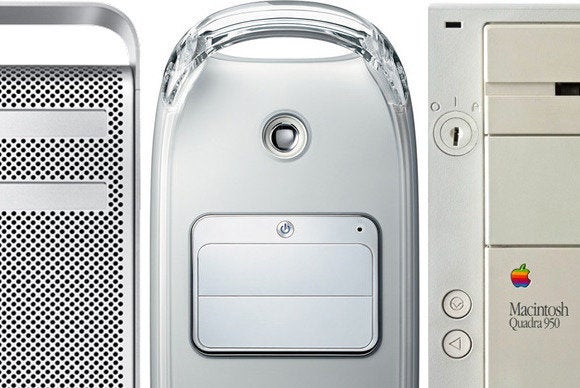
The Power Mac G4 is a series of personal computers designed, manufactured, and sold by Apple Computer, Inc. from 1999 to 2004 as part of the Power Macintosh line. Built around the PowerPC G4 series of microprocessors, the Power Mac G4 was marketed by Apple as the first 'personal supercomputers',[1] reaching speeds of 4 to 20 gigaFLOPS. This was the first existing Macintosh product to be officially shortened as 'Mac', and is the last Mac able to boot into classic Mac OS.
The enclosure style introduced with the Power Macintosh G3 (Blue and White) was retained through the entire five-year production run of the Power Mac G4, albeit with significant changes to match Apple's evolving industrial design and to accommodate increasing cooling needs. The G4 and its enclosure were retired with the introduction of the Power Mac G5.
PCI Graphics/AGP Graphics/Gigabit Ethernet[edit]
The original Power Mac G4 was introduced at the Seybold conference in San Francisco on August 31, 1999.[2] There were two variants, officially titled Power Mac G4 (AGP Graphics) with 400 MHz, 450 MHz and 500 MHz configurations available, and Power Mac G4 (PCI Graphics), with 350 MHz and 400 MHz configurations. Colloquially, this generation of Power Mac is referred to as 'Graphite', owing to the colors of the case being similar to the iMac G3 Graphite.
Apple originally planned to ship the 500 MHz configuration in October 1999, but they were forced to postpone this because of poor yield of the CPUs. In response, Apple reduced the clock speed of the processor in each configuration by 50 MHz (making the options 350 MHz, 400 MHz and 450 MHz), which caused some controversy because they did not lower the original prices accordingly.[3]
The early 400 MHz (later 350 MHz) PCI-based version used a motherboard identical to the one used in Power Macintosh G3 (Blue and White) computers including the use of Zero Insertion Force (ZIF) processors sockets[4] (minus the ADB port), in a 'graphite' colored case and with the new MotorolaPowerPC 7400 (G4) CPU. The higher-speed models, code name 'Sawtooth', used a greatly modified motherboard design with AGP 2x graphics (replacing the 66 MHz PCI slot).
The PCI variant was discontinued at the end of 1999.[5]
The machines featured DVD-ROM drives as standard. The 400 MHz and 450 MHz versions had 100 MBZip drives as standard equipment, and as an option on the 350 MHz Sawtooth. This series had a 100 MHzsystem bus and four PC100SDRAM slots for up to 2 GB of RAM (1.5 GB under Mac OS 9). The AGP Power Macs were the first to include an AirPort slot and DVI video port. The computers could house a total of three hard drives, two 128 GB ATA hard drives and up to a single 20GB SCSI hard drive, with the installation of a SCSI card.
The 500 MHz version was reintroduced on February 16, 2000, accompanied by 400 MHz and 450 MHz models. DVD-RAM and Zip drives featured on these later 450 MHz and 500 MHz versions and were an option on the 400 MHz.
The Power Mac G4 (Gigabit Ethernet) model was introduced at Macworld ExpoNew York on July 19, 2000; the new revision included dual-processor 450 MHz and 500 MHz versions, and a low-end single CPU 400 MHz model. It was also the first personal computer to include gigabit Ethernet as standard. Most people saw this revision as a stopgap release, because higher clocked G4s were not available; the G4’s Motorola XPC107 “Grackle” PCI/Memory controller prevented the G4 from hitting speeds higher than 500 MHz.[citation needed] The dual 500 MHz models featured DVD-RAM optical drives. Zip drives were optional on all models. These models also introduced Apple's proprietary Apple Display Connector video port.
| Component | Power Mac G4 (PCI Graphics) | Power Mac G4 (AGP Graphics) | Power Mac G4 (Gigabit Ethernet) |
|---|---|---|---|
| Codename | 'Yikes!' | 'Sawtooth, P5, Project E' | 'Mystic, Medusa2, SnakeBite' |
| Color | |||
| Model identifier | PowerMac1,2 | PowerMac3,1 | PowerMac3,3 |
| Processor | 350 or 400 MHz PowerPC G4 (7400) | 350, 400, 450 or 500 MHz PowerPC G4 (7400) | 400, Dual 450 or Dual 500 MHz PowerPC G4 (7400) |
| CPU cache | 64 KB L1, 512 KB or 1 MB backside L2 Cache per CPU (1:2) | ||
| Front side bus | 100 MHz | ||
| Memory | 64, 128, 256, 512 MB, or 1GB PC100 SDRAM Expandable to 1 GB | 64, 128, 256, 512 MB, 1 or 2GB PC100 SDRAM Expandable to 2 GB. Only 1.5 GB is seen in Mac OS 9 | |
| Graphics card | ATI Rage 128 with 16 MB of VRAM 66 MHz PCI Slot | ATI Rage 128 or ATI Rage 128 Pro with 16 MB of VRAM AGP 2x | ATI Rage 128 Pro with 16 MB VRAM or ATI Radeon with 32 MB of VRAM AGP 2x w/ADC Monitor support |
| Hard drive | 10 GB ATA Up to 128 GB | 10, 20, or 27 GB 7200-rpm ATA 18 or 36 GB 10K-rpm SCSI Up to 128 GB (10.4.11 and newer support hard drives larger than 128 GB with special software) | 20 GB 5400-rpm, 30 or 40 GB 7200-rpm ATA 36 or 72 GB 10K-rpm SCSI Up to 128 GB (10.4.11 and newer support Hard Drives larger than 128 GB with special software) |
| Ultra ATA/33 | Ultra ATA/66 (Optional Ultra2 LVD SCSI) | ||
| Optical drive | 32× CD-ROM or DVD-ROM | 32× CD-ROM, DVD-ROM, or DVD-RAM | DVD-ROM or DVD-RAM |
| Connectivity | 10/100BASE-T Ethernet 56k modem | Optional AirPort 802.11b 10/100BASE-T Ethernet 56k modem | Optional AirPort 802.11b Gigabit Ethernet 56k V.90 modem |
| Expansion | 1× Zip drive bay (optional Zip drive) 3x 64bit 33 MHz PCI slots 1× 66 MHz PCI slot (dedicated to video) | 1× Zip drive bay (optional Zip drive) 3x 64-bit 33 MHz PCI slots 1× 2× AGP slot (dedicated to video) | |
| Peripherals | 2× USB 1.1 2× FireWire 400 Built-in mono speaker Audio input mini-jack Audio output mini-jack | 2× USB 1.1 2× FireWire 400 1× Internal FireWire 400 Built-in mono speaker Audio input mini-jack Audio output mini-jack | 2× USB 1.1 2× FireWire 400 Built-in mono speaker Audio input mini-jack Audio output mini-jack |
| Maximum Operating System | Mac OS X 10.4.11 'Tiger' and Mac OS 9.2.2 | Mac OS X 10.4.11 'Tiger' and Mac OS 9.2.2 Unofficially can support 10.5 Leopard via 3rd party software | |
| Weight | 13 kg (28.7 pounds) | 13.6 kg (30 pounds) | 13.6 kg (30 pounds) |
Digital Audio/Quicksilver[edit]
A new line with a revamped motherboard but retaining the familiar 'Graphite' case debuted on January 9, 2001. Known officially as the Power Mac G4 (Digital Audio), it is in effect a Quicksilver design inside the Graphite enclosure. Motorola had added a seventh pipeline stage in the new PowerPC G4 design to achieve faster clock frequencies. New features included a fourth PCI slot, a 133 MHz system bus, an improved 4X AGP slot, and a new 'digital audio' Tripath Class T amplifier sound system. The models were offered in 466 MHz, 533 MHz, dual 533 MHz, 667 MHz and 733 MHz configurations, the latter two using a newer PowerPC 7450 processor. The number of RAM slots was reduced to three, accommodating up to 1.5 Gigabytes of PC133SDRAM.
The 733 MHz model was the first Macintosh to include a built-in DVD-R or Apple-branded SuperDrive, the rest of the line became the first Macs to ship with CD-RW drives. This was also the first series of Macs to include an Nvidia graphics card, the GeForce 2MX.
At Macworld ExpoNew York on July 18, 2001, a new line debuted featuring a cosmetically redesigned case known as Quicksilver, and various upgrades to the specifications. It was available in 733 MHz, 867 MHz and dual 800 MHz configurations. The 733 MHz model was notable for not having a level three cache. The SuperDrive was offered on the mid-range 867 MHz model, and UltraATA/100 hard drives were offered on all models. The internal speaker received an upgrade, using a Harman/Kardon speaker.
The Quicksilver line received criticism in MacWorld's review for removing the 'eject' button and the manual eject pinhole, as well as the pass-through monitor power plug, and for the base specification of 128 MB RAM as being insufficient for running Mac OS X.[6]
Updated Quicksilver machines, officially named Power Mac G4 (QuickSilver 2002), were introduced on January 28, 2002, with 800 MHz, 933 MHz and dual 1 GHz configurations. This was the first Mac to reach 1 GHz. Again, the low-end 800 MHz model did not include any level three cache. The graphics in this series were provided by an Nvidia GeForce4 MX400 card. Some of these models have ATA controllers with 48-bit LBA to accommodate hard drives larger than 128 GB.
| Component | Power Mac G4 (Digital Audio) | Power Mac G4 (Quicksilver) | Power Mac G4 (Quicksilver 2002) | Power Mac G4 (Quicksilver 2002ED) |
|---|---|---|---|---|
| Codename | 'Tangent, Clockwork' | 'Titan, Nichrome' | N/A | N/A |
| Model identifier | PowerMac3,4 | PowerMac3,5 | ||
| Processor | 466, 533, Dual 533, 667, or 733 MHz PowerPC G4 (7400/7410/7450) | 733, 867, or Dual 800 MHz PowerPC G4 (7450) | 733 (education only), 800, 933 MHz, or Dual 1 GHz PowerPC G4 (7450/7455) | 867 MHz PowerPC G4 (7455) |
| CPU cache | 64 KB L1, 256 KB (1:1) or 1 MB (1:2) L2, 1 MB L3 (733 MHz) | 64 KB L1, 256 KB (1:1) L2, 2 MB L3 (867/Dual 800 MHz) | 64 KB L1, 256 KB (1:1) L2, 2 MB DDR L3 (933/Dual 1 GHz) | 64 KB L1, 256 KB (1:1) L2 |
| Front side bus | 133 MHz | |||
| Memory | 128, 256, or 512 MB PC133 SDRAM Expandable to 1.5 GB | |||
| Graphics | ATI Rage 128 Pro with 16 MB VRAM, ATI Radeon or Nvidia GeForce2 MX with 32 MB VRAM, GeForce3 with 64 MB VRAM | Nvidia GeForce2 MX with 32 MB VRAM, Geforce2 MX with TwinView or Geforce3 with 64 MB VRAM | ATI Radeon 7500 with 32 MB VRAM, Nvidia GeForce4 MX with 64 MB VRAM or GeForce4 Ti with 128 MB VRAM | Nvidia GeForce4 MX with 32 MB VRAM |
| Hard drive | 30 GB 5400-rpm, 40 or 60 GB 7200-rpm ATA 36 or 72 GB SCSI Up to 128 GB | 40 GB 5400-rpm, 60 or 80 GB 7200-rpm ATA 36 or 72 GB SCSI Up to 128 GB | 40, 60, or 80 GB 7200-rpm ATA 36 or 72 GB SCSI Supports Hard Drives larger than 128 GB | 40 GB 7200-rpm Supports Hard Drives larger than 128 GB |
| Ultra ATA/66 (Optional Ultra SCSI or Ultra 160 SCSI) | ||||
| Optical drive | CD-RW or DVD-ROM or DVD-R/CD-RW SuperDrive (on 733 MHz model only) | CD-RW or CD-RW/DVD-ROM Combo Drive or DVD-R/CD-RW SuperDrive (867 and dual-800 models only) | CD-RW | |
| Connectivity | Optional AirPort 802.11b GigabitEthernet 56k V.90 modem | |||
| Expansion | 1x Zip Drive bay (Optional 250 MB Zip Drive) 4x 64-bit 33 MHz PCI slots 1x 4x AGP slot (dedicated to video) | |||
| Peripherals | 2x USB 1.1 2x Firewire 400 Built-in mono speaker Audio output mini-jack Apple Pro Speakers mini-jack | |||
| Maximum Operating System | Mac OS X 10.4.11 'Tiger' and Mac OS 9.2.2 | Mac OS X 10.4.11 “Tiger” and Mac OS 9.2.2 (733 and Dual 800 MHz) | Mac OS X 10.4.11 “Tiger” and Mac OS 9.2.2 (733 and 800 MHz) | Mac OS X 10.5.8 'Leopard' |
| Mac OS X 10.5.8 “Leopard” (867 MHz) | Mac OS X 10.5.8 “Leopard” (933 MHz and Dual 1 GHz) | |||
| Weight | 13.6 kg (30 Pounds) | |||
Mirrored Drive Doors/FW800[edit]
Another generation of Apple Power Mac G4s, officially named 'Mirrored Drive Doors' (MDD), was introduced on August 13, 2002, featuring both a new Xserve-derived DDR motherboard architecture and a new case design. All models were available in dual processor configurations running at 867 MHz, 1 GHz or 1.25 GHz. As with the Xserves, the PowerPC 7455 CPU used does not have a DDR frontside bus, meaning the CPU of the 133MHz frontside bus models could use at most only 50% of the new system's theoretical memory bandwidth, providing no improvement over previous models. The rest was available to the graphics card and I/O systems. A single processor 1.25 GHz model would be the last Power Mac G4 the company offered to the public after the announcement of the new Power Mac G5, introduced in June 2003.
The last real update to the Power Mac G4 line came on January 28, 2003, offering dual 1.42 GHz PowerPC 7455 processors, with features not seen in previous DDR models: a built-in FireWire 800 connector, optional integrated Bluetooth, and optional integrated AirPort Extreme. These were also the first Power Macs that could not boot into Mac OS 9.
With the launch of the Power Mac G5 on June 23, 2003, Apple re-introduced the August 2002 Power Mac G4 because of perceived demand for Mac OS 9 machines. Between that, its low price-tag, and the delayed availability of Power Mac G5s, it proved a strong seller, albeit for a relatively short time. Production stopped on June 27, 2004, and the remaining inventory was liquidated, its discontinuation ending the 20-year legacy of Classic Mac OS support.
| Component | Power Mac G4 (Mirrored Drive Doors) | Power Mac G4 (Mirrored Drive Doors FW800) | Power Mac G4 (Mirrored Drive Doors 2003) |
|---|---|---|---|
| Codename | 'P57' | 'P58' | ”P59” |
| Model identifier | PowerMac3,6 | ||
| Model Number (Order Number) | M8570 (M8787LL/A, M8689LL/A, M8573LL/A) | M8570 (M8839LL/A, M8840LL/A, M8841LL/A) | M8570 (M9145LL/A), M9309 (M9145LL/A) is a re-released version of (M8573LL/A) |
| Processor | Dual 867 MHz, Dual 1 GHz, or Dual 1.25 GHz PowerPC G4 (7455) | 1 GHz, Dual 1.25 GHz or Dual 1.42 GHz PowerPC G4 (7455) | 1.25 GHz or Dual 1.25 GHz PowerPC G4 (7455) |
| CPU cache | 64 KB L1, 256 KB L2, 1 MB or 2 MB DDR L3 | ||
| Front side bus | 133 MHz (867 MHz DP) | 133 MHz (1 GHz) | 167 MHz |
| 167 MHz (1 GHz DP+) | 167 MHz (1.25 GHz DP+) | ||
| Memory | 256, 512 MB PC-2100 (Dual 867 MHz), or PC-2700 (Dual 1+ GHz) DDR SDRAM Expandable to 2 GB (4 x 512 MB PC-3200 DDR SDRAM) | 256, 512 MB PC-2100 (1 GHz), or PC-2700 (Dual 1.25+ GHz) DDR SDRAM Expandable to 2 GB (4 x 512 MB PC-3200 DDR SDRAM) | 256, 512 MB PC-2700 DDR SDRAM Expandable to 2 GB (4 x 512 MB PC-3200 DDR SDRAM) |
| Graphics Card | Nvidia GeForce4 MX with 32 MB VRAM, ATI Radeon 9000 Pro with 64 MB VRAM, or GeForce4 Ti with 128 MB VRAM Upgradeable to Nvidia GeForce 7800 GS with 256 MB VRAM (last GPU supported) | Nvidia GeForce4 MX or ATI Radeon 9000 Pro with 64 MB VRAM, GeForce4 Ti or Radeon 9700 Pro with 128 MB VRAM Upgradeable to Nvidia GeForce 7800 GS with 256 MB VRAM (last GPU supported) | ATI Radeon 9000 Pro with 64 MB VRAM or Nvidia GeForce4 Ti 128 MB Upgradeable to Nvidia GeForce 7800 GS with 256 MB VRAM (last GPU supported) |
| Hard drive | 60, 80, or 120 GB 7200-rpm ATA 36 or 72 GB Ultra 160 SCSI Supports Hard Drives larger than 128 GB | 60, 80, or 120 GB 7200-rpm ATA Supports Hard Drives larger than 128 GB | 80 or 160 GB 7200-rpm ATA Supports Hard Drives larger than 128 GB |
| Ultra ATA/133 (2) and Ultra ATA/66 (2) (Optional Ultra SCSI or Ultra 160 SCSI) | Ultra ATA/133 (2) and Ultra ATA/66 (2) (Optional Ultra SCSI) | Ultra ATA/133 (2) and Ultra ATA/66 (2) | |
| Optical drive | CD-RW/DVD-ROM Combo Drive or DVD-R/CD-RW SuperDrive (Optional additional Combo Drive) | ||
| Connectivity | Optional AirPort 802.11b GigabitEthernet 56k V.92 modem | Optional AirPort Extreme 802.11b/g Gigabit Ethernet 56k V.92 modem Optional Bluetooth 1.1 | Optional Airport 802.11b Gigabit Ethernet 56k V.92 modem |
| Peripherals | 2x USB 1.1 2x Firewire 400 Built-in mono speaker Audio input mini-jack Audio output mini-jack Apple Pro Speakers mini-jack | 2x USB 1.1 2x Firewire 400 1x Firewire 800 Built-in mono speaker Audio input mini-jack Audio output mini-jack Apple Pro Speakers mini-jack | 2x USB 1.1 2x Firewire 400 Built-in mono speaker Audio input mini-jack Audio output mini-jack Apple Pro Speakers mini-jack |
| Expansion | 4x 64-bit 66 MHz PCI slots (5V only) 1x 4x 133 MHz AGP slot (dedicated to video) | ||
| Maximum Operating System | Mac OS X 10.5.8 'Leopard' | ||
| Mac OS 9.2.2 supported natively and Mac OS 9.1 or higher in the Classic Environment | Mac OS 9.1 or higher supported solely in the Classic Environment | Mac OS 9.2.2 supported natively and Mac OS 9.1 or higher in the Classic Environment(final model to support Classic Mac OS natively) | |
| Weight | 19.1 kg (42 lbs) | ||
Timeline of Power Macintosh models
See also[edit]
| Wikimedia Commons has media related to Power Mac G4. |
Notes[edit]
- ^'Apple Unveils 'Personal Supercomputer''. SFGate.
- ^'Apple steps up to G4 Macs'. ZDNet.
- ^'The 400 MHz PowerMac Reviewed'. The Mac Observer. February 21, 2000. Retrieved October 19, 2008.
- ^'The Apple Power Macintosh G4 400MHz PCI'. Forevermac.com. Retrieved November 30, 2011.
- ^'Power Mac G4 (PCI Graphics) - Technical Specifications'.
- ^'Hands on with the Power Mac G4/867'. MacWorld. August 25, 2001.
| Click here to return to the 'A possible fix for a Mac that won't power up' hint |
Most of the Time its is alway the PMU RESET Button. it always works (except for the one bondie, but that was the power supply) its very tiny and does the same thing as removing the clck battery, ust its not a likely to kill the battery.
this was a problem with your 'PMU'..
occurs freqently when there is a power disruption in your area..
there is also a small button on the logic board that would do the same thing.
On my machine, at least, this is called the 'CUDA switch.' Search Apple help for more information. Reportedly, pushing it more than one in a power cycle will render your computer useless!
I'm Getting Power Hungry..imac G4 User
I have a G4 Quicksilver 2002 that almost never powers up from a cold start -- I always have to open it up and hit the CUDA switch. From what I've read, it's a problem with the logic board or the power switch board, and would have been replaced under warranty had the problem shown up soon enough.
Try a new clock/PRAM battery--you can get them at Radio Shack.
If that doesn't fix it, it may be a problem with the front panel circuit board.
Yes, I had this same thing happen on my mirrored door G4. And I found the same solution. All I did was put a new battery in. Thanks for posting this.
I think there was something on the Apple website about it recently - something to do with the battery draining because of some power surge or improper shutdown...
---
soph
I have rescued dozens of G4's with this symptom by simply unplugging the power cord, removing the battery, counting to 10, reinserting the battery and power cord - and booting.
It's a good idea to always check the voltage on the battery because of the discharge curve on Lithium ion batteries. The drop off is rather steep as compared to a alkaline type which drops off gradually. Since the motherboard doesn't draw that much power, simply warming it up will often do the trick (ie. like your remote control for the TV).
I hope you don't mean warming up the battery. You don't want to warm up a lithium ion battery. Just google what could happen if you do that.
Actually, you want to measure the battery's voltage and its current--lithium batteries (at least the 3.6 volt, 1/2 AA batteries used to power Mac clock/RAM chips) will maintain their rated voltage even after they've practically drained away, but their current level will tell the true story; they won't measure substantially less than their rated voltage until some time after they're no longer useful. What's happened is the battery's chemicals have changed state, to the point where the battery is basically a big resistor and so they can't deliver enough current, though the voltage deceptively still looks OK. Unfortunately, many cheap digital meters don't have a current measuring scale.
i do the same thing, w/o removing the battery. i unplug the pwr cord and click the start button to discharge the pwr supply.
Now you tell me! I took my dead MDD to the Genius Bar and the genius told me the odds were 99% that it was the logic board! I junked the machine! My symptoms were exactly what you described! Aaargh!

The geniuses really aren't.
This was a simple PMU issue. There's no reason to waste your time with pulling the battery out. Just push the button on the logic board.
ACSA 10.3, ACTC 10.3, ACHDS 10.3, ACDT, ACPT
I'm Getting Power Hungry..imac G4 Phone
Resetting the CUDA, PMU or SMU for power related issues is such a basic step that I find it hard to believe that ACHDS, ACDT and ACPT certified techs (which is what Geniuses are) would not have tried that.
There probably was a logic board issue after all.
I found it hard to believe myself, but it's what happened. I subsequently managed to retrieve the machine and reset the PMU - now it works fine. There was nothing wrong with the logic board.
Resetting the Power Manager for a none starting Mac is a standard procedure and is fully documented on apple knowledgebase. I not sure why it appears as a hint on this in 2005. When Mac users have been using the technique for years.
What is important to know is that you must neve reset the PMU button twice in a row. You must leave at least 10 to 15 seconds if you think you need to press it again. If you do press the button twice you can crash the PMU which would cause the batttery which normally last for years to expire in 3 days.
As well as keep your machine from ever booting again without replacing the logic board...
robg, PLEASE, post the instructions for a proper PMU reset procedure for desktop machines in the displayed text of any hints that get close to this subject. They are:
1. Unlpug the power cord.
2. Using a non-metalic tool (your finger, if it'll reach) push the PMU reset button (location varies by machine) ONCE and for no more than one second.
3. Wait 15-60 seconds.
4. Plug the power cord back in and hit the power button.
Note that a bad logic board, processor or stick of RAM can cause the same symptoms described by the original poster so a PMU reset is no guarantee.
'I'm never quite so stupid as when I'm being smart.' -Schultz
I don't know where the myth came from that suggests if you crash your PMU you need to replace your logic board but it's not true.
The most you can do crashing PMU is to expire the battery.
For those that want the official procedure for resetting the PMU here it is.
Resetting the PMU on the Logic Board
The PMU (Power Management Unit) is a microcontroller chip that controls all power
functions for this computer. The PMU is a computer within a computer. Its function is to:
• tell the computer to turn on, turn off, sleep, wake, idle, etc.
• manage system resets from various commands.
• maintain parameter RAM (PRAM).
• manage the real-time clock.
Important:
Be very careful when handling the logic board. The PMU is very sensitive and
touching the circuitry on the logic board can cause the PMU to crash. If the PMU crashes
and is not reset, the battery life goes from about five years to about two days.
Note:
For the location of the PMU reset button, see 'Logic Board Diagram' in the Views
chapter.
Many system problems can be resolved by resetting the PMU chip. When you have a
computer that fails to power up, follow this procedure before replacing any modules:
1. Disconnect the power cord and check the battery in the battery holder. The battery
should read 3.3 to 3.7 volts. If the battery is bad, replace it, wait ten seconds, and then
proceed to step 2. If the battery is good, go directly to step 2.
2. Press the PMU reset button once and then proceed to step 3. Do not press the PMU
reset button a second time because it could crash the PMU chip.
3. Wait ten seconds before connecting the power cord and powering on the computer. If
the computer does not power on, there is something else wrong with it; refer to the
'System' section of 'Symptom Charts' in this chapter.
Note:
The above procedure resets the computer's PRAM. After resetting the PMU, be
sure to reset the time, date, and other system parameter settings.
I have had a number of clients with un-revivable logic boards who've told me that before bringing their machines in for service, someone they knew told them to either hit the PMU reset button several times in a row or even to hold it down for thirty seconds or more. Granted, this is just a correlation and not a proven cause and effect - more likely these folks may have just had an ESD incident while they were dinking around inside their machines or the MLBs had already failed in some other way - but why take chances? If a little fear causes people to be conservative and extra careful when messing around with a part that's US$300-500 to replace, that's less harmful misinformation than the many and varied PMU reset procedures that get propagated here and other places on the web. BTW, thanks for posting the official procedure.
(Note: Apple appears to be dispensing with the PMU - the newest G5s have a SMU (System Management Unit) which handles most of the same tasks but does not have a reset button. It's reset by simply unplugging the power cord for 15 seconds. I would hazard a guess that Apple may be tired of all the warranty logic board replacements that they've done because the user did an improper PMU reset...)
PMU reset and/or battery removal can fix many problems.
Here is another hint:
On some Macs (like the G5 iMacs) actual REMOVAL of the battery can be difficult. A workaround is to get a small piece of paper (something which is a bit stiffer than normal paper works best like a matchbook, index card, etc.) and just slip this under the top battery contact. This effectively disconnects the battery.
Wait a good 10-15 minutes, then remove the paper, and start up.
this is a known issue with the G4 MDD models. if you browse through apple's discussion forums, you'll find plenty of evidence of this.
i support a newspaper's Macs and have had this problem with many of the MDD units. we purchased about 50 or 60 of them in 2002, and probably half of them have had this PMU problem at one time or another.
this is the one model where i've experienced this problem most often. most other newer or older Macs might need an occasional PMU reset, but not the MDD models.
This is a copy of an email I sent in response to a mailing-list posting about a system that sometimes spontaneously re-boots after being shut down and sometimes won't boot when the power button is pressed (it was a MDD PowerMac). My (edited) response to the poster was:
-----
Your problems might be related to the following:
It turns out that some of the ATI Radeon graphics cards (e.g., the 9000 in our ol' DualGig MDD) can cause/exhibit these problems when using the DVI-to-VGA adapter with certain kinds of VGA cables. VGA cables have some pins that are either present/wired or not because they are used to indicate the 'kind'/size of montior (VGA, XVGA, etc. ... i.e., the pixel dimensions).
I've found that using some VGA cables (i.e., wired to indicate some monitor sizes), but not others, will cause the following behavior (sorry, I've not figured which is which):
- when the VGA cable is connected and you attempt to shut the system down, the system will shutdown then immediately reboot (i.e., seemingly can't be shut down)
- when the system is powered down (e.g., by removing the A/C power cord) and then the power button is pressed (while the VGA cable is connected via the DVI-to-VGA adapter) the system will not not start up until the VGA cable is temporarily removed
One can imagine why this scenario occurs when you consider that the ATI card must (somehow) be connected to the power-on logic/signals because it also has an ADC connector (that supports powering on/off the system via an Apple monitor).
Anyway, I hope this helps someone ... sometime.
(Great resource, this Mac OS X Hints ... nice job!)
I'm Getting Power Hungry..imac G4 Unlocked
I bought a used G4 Quicksilver at auction. It looks in great shape, no damage, cracks or signs of misuse. Anyway I have no luck in getting it to power up. The Front panel light will not stay lit, but the fan is running and the little red light on the mother board is lit. The DVD/CD drive clicks quietly twice on start up but other than that there is no activity. I replaced the battery and used the info you guys posted about the power button located on the board also, but still no luck. Any other suggestions? Thanks.
I have to to the same thing to power up my cube, the only problem is that it only works once. After turning the power off I have to redo the hole procedure to start it up again. (and everytime I have to remove the graphicscard to get to the reset button)
Any ideas what else I could do? (buying a new battery didn't work either)
I'm Getting Power Hungry..imac G4 Battery
The following check list is from the cube engineers manual. As you can see everything points towords replacing your logic board if yoru rule out issues with the power supply, dc-dc Board etc.
If have resetting your PMU your still getting issues and you've followed the procedure here, then I would use the hard ware test cd that came with your cube which will test your logic board. You would also get much more advice about your issue over at the disussion forum at http://cubeowner.com.
No apparent power (no sound and power LED is not lit)
1. Verify the power outlet is good.
2. Replace the power cord.
3. Reset the logic board. Refer to 'Resetting the PMU on the Logic Board' in this
chapter.
4. Check for trickle voltage on the power adapter connector. Refer to 'Power Adapter
Verification' in this chapter. If verification fails, replace the power adapter.
5. Disconnect external devices, including the monitor, and start up the computer.
6. Remove internal cards and start up the computer.
7. Disconnect internal hard drives from the logic board and start up the computer.
8. Reseat the DC-to-DC board in its connector.
9. Check the modem connector. If the connector has any bent pins, replace the logic
board.
10. Replace the logic board.